Sewage Is Backing Up: What to Do and What to Skip
Wastewater carries bacteria, so limit exposure first.
Do this right away
- Stop using every sink, tub, shower, dishwasher and washing machine.
- Do not flush. Each flush sends another 1.6 gallons or more toward the blockage.
- Keep children and pets out, and wear rubber gloves and boots if you must enter.
- Open windows for airflow and move rugs and cords off the wet floor.
- Photograph the damage for your insurance carrier before cleanup.
Do not do this
- Do not pour bleach or chemical drain openers into a backup. They can burn skin, release fumes and damage the pipe, and they will not clear a collapsed line.
- Do not run a plunger on a tub that is filling from the floor drain.
- Do not touch wet outlets or appliances sitting in sewage.
- Do not wait overnight to see if it drains. A line that backs up once usually backs up again.
Why Sewer Lines Fail in North Texas Clay
Clay-heavy North Texas soil swells when it is wet and shrinks when it is dry. A buried drain line rides along with that movement, so a joint that was tight can slip, a section can sag into a belly that holds water, and a crack can open. In this part of North Texas that seasonal movement is one of the most common reasons a sewer line goes from working to failing.
Roots add to it. Fine roots find the tiny weep at a joint, enter, and grow into a mat that catches paper and grease. Older cast iron fails by scaling and rust from the inside, and homes built before the mid-1990s may have either cast iron or clay tile under the slab. We never assume what a particular house has until the camera shows it.
Warning Signs Before the Line Fails
A sewer rarely goes without a warning. These are the signals that justify a camera look before the backup arrives.
Gurgling fixtures
A toilet that bubbles when the washer drains is pushing displaced air back up the line. It usually means a partial blockage downstream.
Several drains slow at once
One slow sink is local. Slow sinks, tubs and toilets together point to the main line.
Sewage smell outside
A rotten-egg odor near a cleanout or one patch of grass that is greener and wetter than the rest suggests a leak in the buried line.
Cracks or dips in the slab and yard
Soil washed into a broken pipe leaves voids. A new low spot over the line is worth investigating.
Rodents or insects indoors
A broken line gives pests a direct path into the house.
Repeat clogs after cleaning
If a line clogs again within a few weeks of sewer line cleaning, cabling is treating a symptom of damaged pipe.
Spot Repair, Lining or Full Replacement
The right fix depends on how much pipe is damaged and what sits above it. The camera footage decides, not the first guess.
| Option | Best when | Trade-off |
|---|---|---|
| Spot repair (dig and replace a section) | One cracked or offset section, easy to reach. | Needs excavation at that spot and a yard or slab patch. |
| Trenchless pipe lining | Pipe is intact enough to hold a liner, with roots or small cracks. | Cannot fix a collapsed or badly bellied pipe. |
| Pipe bursting | Failed pipe along a long run with room at both ends. | Needs two access pits and a pipe path free of obstructions. |
| Full lateral replacement | Pipe is crushed, severely bellied or fails in several places. | Highest disruption but a fresh run of pipe. |
| Cleanout installation | No access point exists for cleaning or cameras. | Adds a fitting but makes future service simpler. |
A broken line under a slab may need a tunnel or partial slab opening. Ask your plumber to show the footage before you approve any plan.
Sewer line acting up?
Call (817) 601-6266 and a licensed plumber will tell you what to shut off and book a same-day camera visit when available.
How We Find the Break
We start with a camera on a push cable, fed through the cleanout or a pulled toilet. The head has a light and a transmitter, so we can locate the problem with a handheld receiver at the surface and measure how deep it sits. That tells you where a trench would go, or whether lining is possible. For a stand-alone camera visit, see our sewer inspection page.
If roots or a blockage stop the camera, we clear the line first with a cable or a hydro jetting pass at a pressure matched to the pipe material. Then we run the camera again. Skipping that step means guessing, and guessing is how people end up paying for a dig that was not needed.
Locating before digging
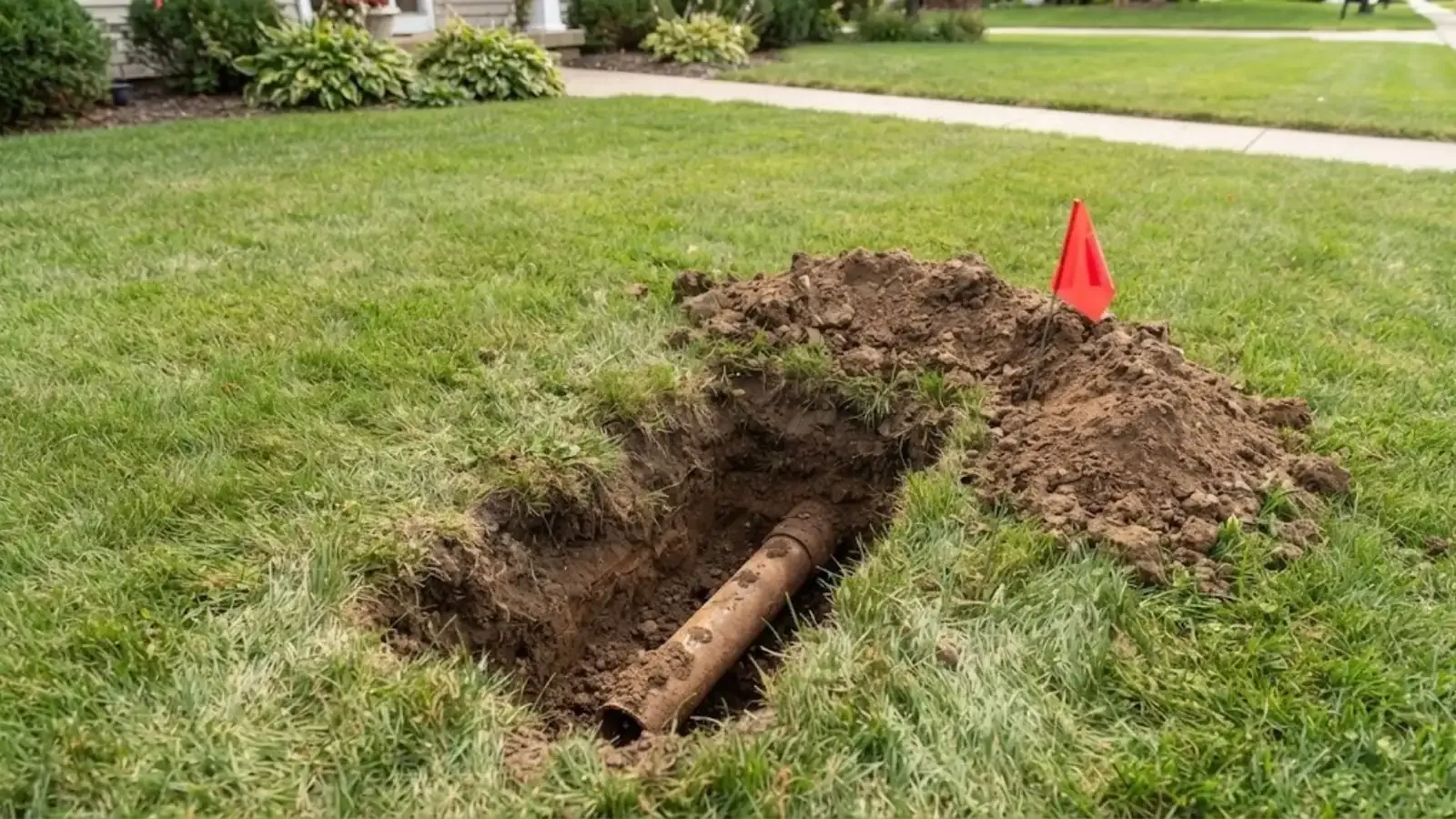
Digging on a hunch ruins lawns and sometimes irrigation lines. A locate mark and a depth reading from the transmitter usually let us dig a hole the size of a doorway rather than a ditch across the yard.
Crowley Code Points That Shape the Work
Crowley has adopted the 2021 International Plumbing Code with local amendments. Section 305.4.1 requires building sewers to sit at least 12 inches below grade, which matters when a shallow line freezes, gets run over or is hit by a shovel. Section 306.2.4 calls for underground plastic drain pipe to go in per the manufacturer with 4 inches of granular bedding and 85 percent standard proctor compaction.
For a homeowner this is practical: bedding and compaction keep a new line from sagging, so a repair that skips them can bring you back to a belly in a few years. Section 1109 is deleted in the amendments, so storm sewers connect on their own to the public sewer. Your roof and yard drains should not be tied into the sanitary line.
Permit rules vary, so ask the Crowley building department at 817-297-2201 ext. 3000 whether your repair needs a permit.
Backup Causes We See Most Often
Not every backup is a broken pipe. These are the usual suspects, in roughly the order a camera finds them.
- Tree roots in joints or at the cleanout connection.
- Grease, wipes and paper that built up in a low spot (a belly).
- A displaced or crushed section where clay soil moved the pipe.
- A sewage ejector pump that has failed, in a bath or room set below the main line, so wastewater has no way out.
- A blockage in the city main, which is not a home-line problem. Ask Public Works if neighbors are affected.
The ejector pump item matters because it mimics a main line failure. An ejector basin holds wastewater until a float switch starts the pump, and a stuck float, a dead pump or a clogged check valve sends sewage to the lowest drain in that room.
What Moves the Cost of a Sewer Repair
A sewer job is scoped from the camera footage, then priced before work starts. These are the factors that change the bill.
Homeowners policies usually cover sudden and accidental water damage inside the house, and some offer a separate endorsement for sewer backup. They usually do not cover root intrusion or gradual wear on the pipe itself, so call your carrier before you file.
Septic Systems: What We Do and Do Not Do
Some callers ask about septic service. We do not do septic tank pumping, and we would rather say so than send the wrong truck. We can diagnose and repair the household drain and sewer piping that connects to a tank or to the city sewer.
If your property is on a septic tank, a pump-out and tank inspection come from a septic specialist. Once that is done, call us if a clog or broken pipe between the house and the tank is the real issue. Crowley's own wastewater collection is handled by Public Works at 817-297-2201, and after hours that backup line goes to Police Dispatch at 817-297-2276.
Sewer Repair Across Crowley and Nearby Towns
Crowley's pioneers farmed near Deer Creek around 1848, and a Deer Creek development bears the name today. Whichever neighborhood you live in, we assume nothing about the pipe under it, so each house gets the same camera look before we recommend lining or digging.
If you are across the line in Burleson, where Village Creek flows through the city, the same clay-soil logic applies. Our crews also cover Everman and Forest Hill, and we pair sewer repairs with drain cleaning when the line needs clearing first.
Sewer Repair Questions
Yes. We are open 24/7 and a sewage backup is one of the calls we take at any hour. Tell us which drains are backing up, stop using water, and we will book the earliest same-day or after-hours visit available.
A clog usually clears with a cable or jetting, and it stays clear. A broken line clogs again within weeks and the camera shows a crack, offset joint, root mass or belly. The footage settles it.
Not always. Lining skips the trench but needs special equipment, and it cannot fix a collapsed pipe. We compare options after the camera inspection and explain which fits your line.
Displaced air is being pushed back up the line because water cannot flow past a partial blockage. Stop running water and call for a camera look before it becomes a full backup.
Often only if you added a water backup endorsement. Policies usually cover sudden and accidental damage and usually exclude wear and root growth. Your carrier can tell you what applies.
Yes, we replace and repair the sewer lateral on the home side. Ask Public Works where the city side ends, since the city pages do not say, and we will work from that boundary.
No. We do not do septic tank pumping, so call a septic hauler for that. We can handle the household plumbing connected to the tank.