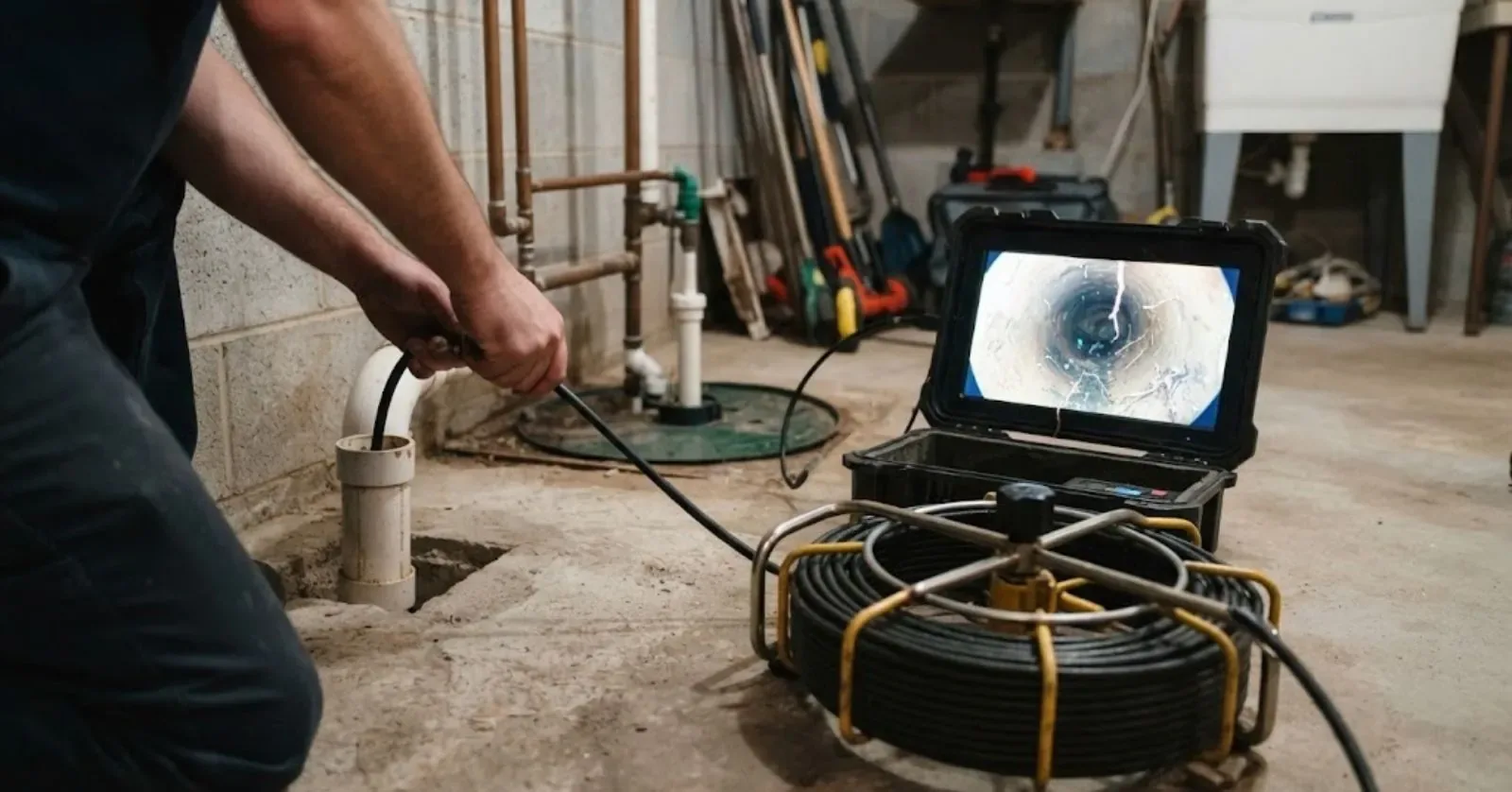
What the Camera Shows You
The picture on the screen replaces a lot of speculation. These are the findings that come up most.
Roots
Fine roots enter through joints and thicken into a mass that catches paper and grease. Roots mean the pipe has a gap, so cutting them clears the line for a while but does not seal it.
Bellies and sags
A belly is a low spot that holds water and waste. It often comes from soil settling under the pipe, and you can spot one when the camera shows a standing pool that never drains.
Cracks and offsets
Joints that have slid apart or a pipe that has split along its length show up as dark gaps or a ragged edge. These are the defects that eventually need sewer line repair.
Grease and scale
Coating on the pipe wall narrows the passage over time. If the pipe is otherwise sound, a cleaning pass such as hydro jetting often solves it.
Belly-free, clean pipe
Sometimes the answer is good news. A smooth, continuous line with no sags tells you the clog was local, such as a toilet trap or a branch drain.
Collapsed or crushed sections
A collapse can stop the camera cold. Where it stops, we note the distance and locate it from above so you know how far from the house the problem sits.
Why Clay Soil Matters Underground
In this part of North Texas the clay soil swells when wet and shrinks when dry. That seasonal movement pushes and pulls on buried pipe, and over many cycles a line can sag, separate at a joint, or crack. It does not mean every line fails, but it explains why a camera look is worth it on any older drain and on any line with a history of backups.
Crowley's local plumbing amendments address this directly. They require underground plastic drain piping to sit on 4 inches of granular bedding with 85 percent standard proctor compaction, and building sewers at least 12 inches below grade. Those rules show the city treats soil support as part of a good install, and they guide what we look for when a line has settled.
How an Inspection Visit Works
Most visits take a short stretch of the day, and you do not need to be home for all of it.
We find the access point.
A cleanout outside the house is the best entry. If there is none, we pull a toilet or reach the line through a roof vent, then run a short test flush to confirm which way water flows.
The camera goes in.
A flexible rod carries a sealed camera head with lights. As it advances, a counter tracks the distance in feet and we record the whole run.
We locate and mark.
A transmitter in the camera head sends a signal we trace from above. We mark the line's path and depth on the yard or driveway so you know where it runs.
You get the findings.
We show you the recording, explain what each defect means, and say plainly whether it needs cleaning, repair, or nothing at all. You decide what comes next.
Buying a House: Reading the Sewer Camera Report
A camera inspection before closing is common sense, since the main line runs under the yard and the seller may not know its condition. This table shows how findings usually translate into decisions.
| What the camera finds | What it means | Typical decision |
|---|---|---|
| Clean, continuous pipe. | No visible defects. | Proceed, keep the recording. |
| Roots at a joint. | The pipe has a gap. | Ask for a repair credit or a repair before closing. |
| Belly holding water. | Settled soil under the line. | Negotiate and get a repair estimate. |
| Cracked or offset sections. | A defect that will worsen. | Repair needed, plan it into the price. |
| Cannot pass a collapse. | Line blocked or failed. | Locate it, price replacement before you buy. |
A seller may agree to a repair or credit. A written report from a licensed plumber gives you something concrete to bring to the table.
Want eyes on your sewer line?
Call us and a licensed plumber can book a camera visit, with same-day appointments when available.
Before You Dig: Locating the Line First
If you plan to add a fence, pool, or patio, the sewer line location matters. Digging into a sewer line is messy and expensive to fix. A camera with a locator marks where the pipe runs and how deep, so contractors can plan around it.
The depth also tells you something. Crowley's amendments set a minimum depth of 12 inches below grade for building sewers, so a shallow reading can mean the pipe was installed outside that rule or has been disturbed by erosion. Either way, a defect there is much cheaper to find now than with a trench open.
City of Crowley Inspections and Your Sewer Work
If a sewer repair or replacement needs a city inspection, requests go through the City of Crowley Community Development office at 817-297-2201, ext. 3020. The permits office is at ext. 3000, open 7:30 to 5:30 Monday through Thursday and 7:30 to 11:30 on Friday morning. Permit rules vary, so ask the Crowley building department whether your project needs one.
Camera inspections themselves are a look, not a repair. Plan on calling the city only if your findings lead to digging or replacing pipe.
What Determines the Cost of a Sewer Inspection
Every inspection is quoted with a clear price before work starts. These factors change the quote.
Homeowners policies usually cover sudden and accidental damage and usually do not cover a sewer line that failed from age, roots, or wear. Some carriers offer an optional line coverage endorsement. Check with yours before work starts, so you know whether a repair is covered.
When to Schedule a Sewer Camera Inspection
Not every drain problem needs a camera. These situations do.
- Two or more drains back up at the same time.
- A clog returns weeks after a cleaning.
- A gurgle or sewer smell in a bathroom.
- Wet, sunken ground along the sewer path in the yard.
- You are buying or selling a home.
- You plan to build or excavate near the line.
For clogs that need clearing right now, our drain cleaning team can step in, and the camera helps confirm the line is clear afterward.
Serving Crowley and Nearby Towns
We handle inspections across Crowley, along FM 1187 and FM 731, and out to neighboring towns. The same visit applies in Burleson, Everman, and Forest Hill, where older lines may need a closer look.
Our line is open 24/7 if a backup cannot wait, and non-urgent inspections are booked at a time that suits you.
Sewer Inspection Questions
Most take a short part of a morning or afternoon, depending on access and line length. A cleaning pass first adds time. We will tell you what to expect when you call.
Yes. A transmitter in the camera head lets us trace the line above ground and mark its path and depth. That is useful before you dig or build.
It is a good idea, especially when the home has had backups or has mature trees near the line. A recorded camera report shows defects you cannot see from the surface. Use it to negotiate.
Yes, roots are easy to spot on camera. We note where they enter and how thick they are, and tell you if cleaning or repair is the better next step.
Not for the look itself. If a repair involves digging or replacing pipe, permit rules vary, so ask the Crowley building department at 817-297-2201, ext. 3020 for inspections or ext. 3000 for permits.
We explain the options and give a clear price before any repair starts. Depending on the defect, that can be cleaning, spot repair, lining, or replacement, as described on our sewer line repair page.