Spot Repair, Reroute or Repipe: The Decision Table
Use this as a starting point. A licensed plumber confirms it with a pressure test and a look at the pipe.
| Situation | Usual best fit | Why |
|---|---|---|
| First leak, pipe otherwise sound. | Spot repair. | The break is local, so a small repair fixes the cause. |
| Leak under hard-to-reach concrete. | Reroute through attic or wall. | A new line avoids a large trench inside the house. |
| Second or third leak in a few years. | Repipe. | Repeated failures mean the pipe is wearing out everywhere. |
| Gray plastic or old galvanized pipe. | Repipe. | Material itself is failing and will keep leaking. |
| Leak on a single branch serving one bath. | Reroute that branch. | Limits work to one zone. |
Slab leak repair and repiping both need access and a clear price before the work starts.
Why Slabs Leak in This Part of North Texas
Clay-heavy soil in this region swells when it is wet and shrinks when it is dry. A slab-on-grade foundation rides on that soil, so it can flex slightly through the seasons. Copper lines under or against the concrete rub, kink or stress at joints over time.
Other causes add to the strain. Pipe can be nicked during construction, and a line laid against rough concrete wears through slowly. Hot lines expand and contract and can rub a hole where they pass through the slab. None of these point to a bad house, they just explain why slab leaks keep showing up in the area.
Both options must meet the 2021 International Plumbing Code. According to the Texas State Board of Plumbing Examiners, you can confirm a plumber's license and insurance on file before you sign anything.
Signs the Leak Is Under the Foundation
Water bill jumps
A bill that climbs with no change in habits points to a hidden loss. Run a meter check with every fixture off.
Warm patch on floor
A spot of tile or wood that feels warm when no hot water is running often sits over a leaking hot line.
Sound of running water
A hiss at night near a wall or floor is a classic sign.
Cracks, damp carpet, low pressure
Moisture under the floor can lift flooring and cause musty smells. Low pressure at one fixture group may also mean a break.
Verify the Plumber Before You Pick the Fix
Texas licenses plumbers through the Texas State Board of Plumbing Examiners. Ask any company for its Responsible Master Plumber, then look up that Master Plumber's license in the board's Public License Search. Master Plumber numbers start with M.
The same search shows whether a Certificate of Insurance is on file. For a job as large as a repipe, do that check before you sign, and do it for any company, ours included. It takes a few minutes and tells you who is responsible for the work.
Source: Texas State Board of Plumbing Examiners consumer information
What Each Option Actually Involves
Spot repair
Once listening gear and a pressure test locate the leak, the plumber opens a small section of floor, cuts out the bad pipe and installs a new piece. The slab is patched. This is the fastest and least disruptive route, and it is covered on our slab leak repair page.
Reroute
A new line is run through the attic or inside walls to feed the same fixtures, and the old line under the slab is capped. It avoids breaking concrete, and it is often the choice when the leaking line runs under a kitchen or a tiled hall. You get easier future access, too.
Repipe
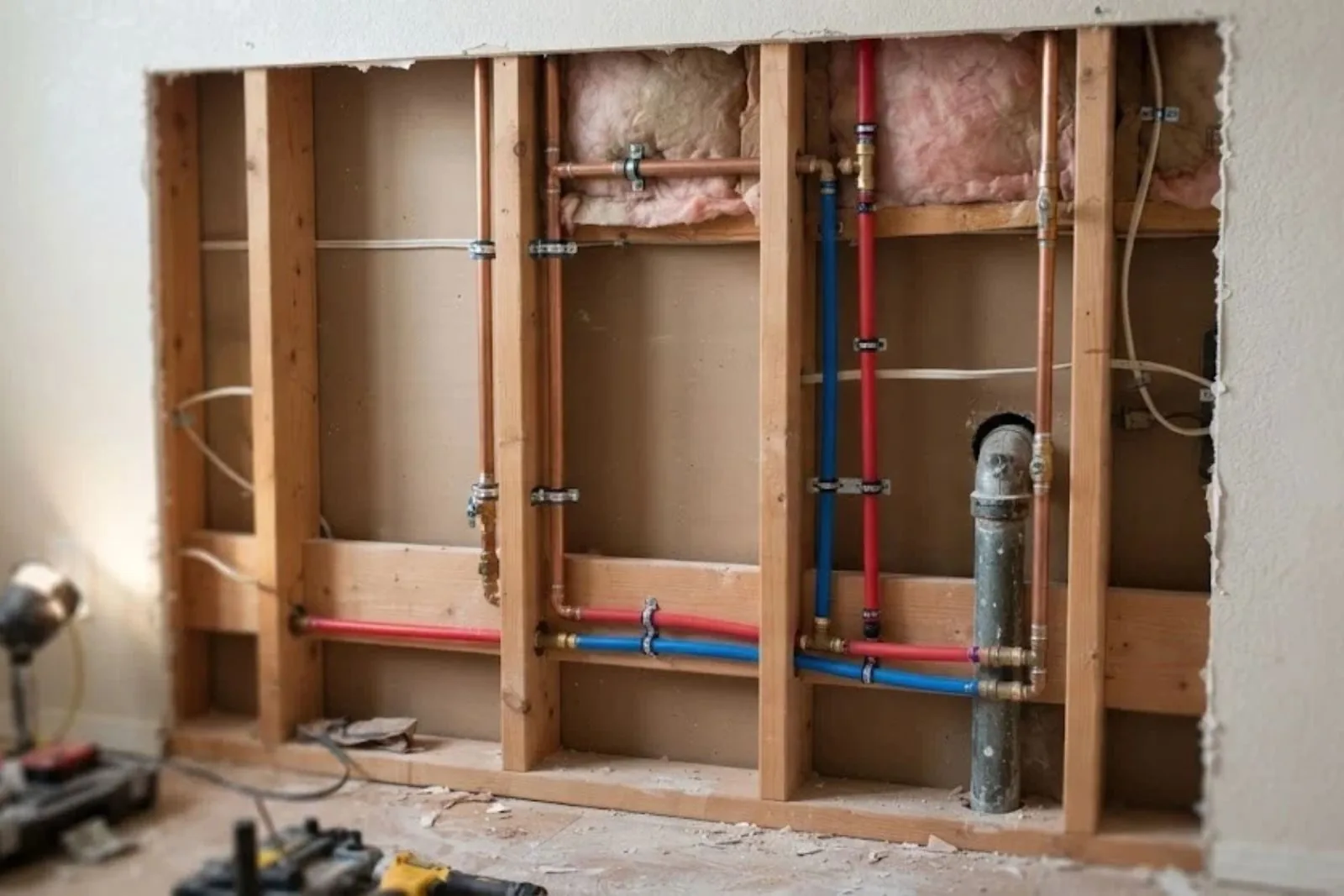
A whole-house repipe replaces the supply lines with new pipe, usually PEX or copper, while the drains stay. Walls are opened at points and patched afterward. It is the largest job, and it ends the pattern of repeated leaks.
Fix One Leak or Replace Everything
Neither choice is right for every house. These are the trade-offs a plumber should explain.
Why fix one leak
- Lower disruption, usually done in a day or two.
- Fits a house with newer, healthy pipe.
- Leaves the rest of the system alone.
- Still carries a chance of another leak later.
Why repipe
- Ends repeated leaks in aging or failing pipe.
- Can improve water pressure and flow.
- Removes risky materials such as gray polybutylene.
- More upfront work and wall repair afterward.
New Pipe in Crowley Soil: A Code Detail
Crowley has adopted the 2021 International Plumbing Code, with local amendments posted by the city. Section 305.1 of the local amendment says metallic piping, except cast iron, ductile iron and galvanized steel, must not sit in direct contact with corrosive soil, and requires sheathing at least 8 mil thick.
For you, this affects any new copper that runs underground, such as a service line. Ask your plumber how the pipe will be protected in the ground. For a reroute through the attic, soil contact does not apply, which is part of why attic routes are popular.
What to Do Right Now and What to Ask
If you suspect a slab leak, these steps limit damage and help you compare offers.
- Shut the main valve.Do it if water is pooling or if the meter keeps spinning. Open a faucet to relieve pressure.
- Keep away from wet electrical items.If water is near outlets, a panel or appliances, keep people away and turn off power only from a dry spot.
- Ask how the leak was confirmed.A real diagnosis includes a pressure test and a located point, not a guess.
- Ask for options in writing.A good plumber describes spot repair, reroute and repipe with their pros and cons.
- Check the license.Use the TSBPE lookup and make sure the company has a Responsible Master Plumber.
What Affects the Price of Each Option
We do not quote prices in articles because every slab and layout differs. These are the factors that move the number.
Homeowners policies usually cover sudden and accidental damage, such as a burst pipe, and usually do not cover slow leaks or wear. Some carriers pay for access to the leak even when they do not pay for the pipe, so ask before you start.
Serving Crowley and Nearby Towns
We handle slab leaks across Crowley and for neighbors in Burleson, Everman and Forest Hill. Older homes in any city deserve a pipe check when a second leak appears, since homes built before the mid-1990s may still have polybutylene or galvanized supply lines.
If you want to talk through your situation, call (817) 601-6266. Dispatch is open 24/7 for active leaks.
Slab Leak and Repipe Questions
Look at the history. A first leak in sound pipe usually calls for a repair. Repeated leaks, failing material or leaks in several rooms point toward a repipe.
Mostly yes. The new line runs through the attic or walls, so the concrete stays in place. Some floor or wall access may still be needed at fixtures.
Usually yes for a short time if you shut the main valve when needed. Watch for water near electrical items and call quickly, since a long leak can damage flooring and the foundation area.
Ask for the Responsible Master Plumber and look up that plumber's license in the TSBPE Public License Search. The tool also shows if a Certificate of Insurance is on file.
Clay-heavy North Texas soil moves as it swells and shrinks, which stresses pipes in and under a slab. It is a common contributor, though not the only cause.
It depends on the policy and the cause. Sudden damage is often covered, while wear and slow leaks usually are not. Ask your carrier about the pipe, the access and the water damage separately.