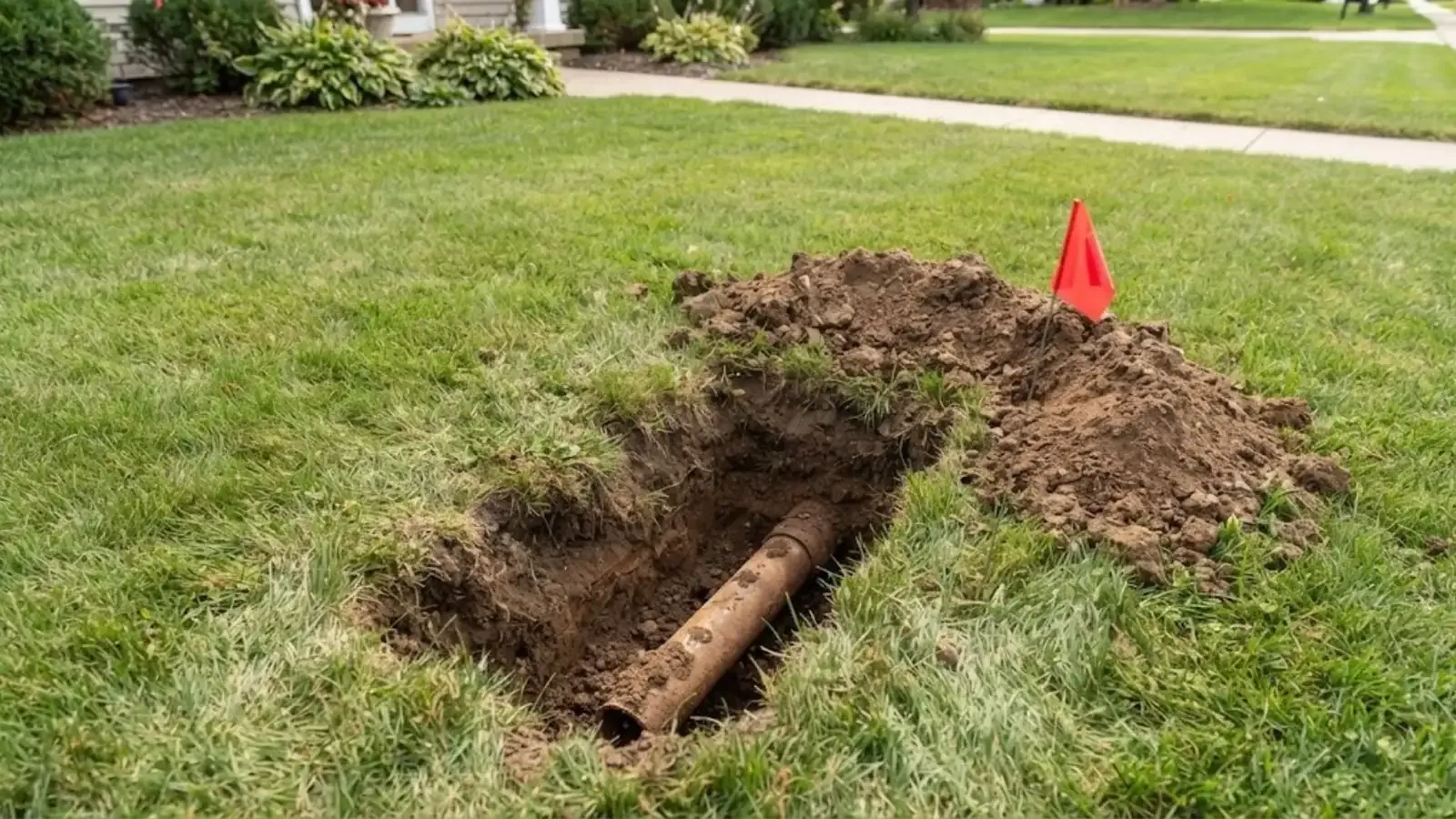
Spot Repair, Lining or Replacement
Most jobs fall into one of three buckets. This table shows where each fits.
| Option | Best when | Trade-off |
|---|---|---|
| Spot repair. | One short section is cracked, offset or root-damaged. | Leaves the rest of the old pipe in place. |
| Pipe lining. | The pipe is mostly sound but has several cracks or joint leaks. | Needs a pipe with a clear path and decent shape. |
| Full replacement. | The pipe is collapsed, bellied or failing along its length. | Most digging and restoration. |
| Pipe bursting. | The old line can be broken and replaced in place. | Needs access pits at both ends. |
A licensed plumber should show you the camera video before recommending any of these.
Signs the Line Is Failing
A damaged sewer pipe rarely fails all at once. Watch for these.
Repeated clogs
The same drain backs up every few weeks, even after cleaning.
Gurgling drains
A toilet that bubbles when the washer drains can mean air trapped by a blockage.
Wet or sunken yard patches
A soggy, smelly spot over the sewer path suggests a break.
Sewer smell indoors or outdoors
Gas from a cracked line can reach the crawl space, garage or yard.
What the Camera Is Looking For
A small camera on a flexible rod runs the full length of the line, from the cleanout to the tie-in at the main. The video records the distance to every defect, so we can mark the spot above ground.
We look for cracked or broken pipe, joints pulled apart, roots growing through gaps, and a belly where water sits instead of draining. Each tells us a little about the cause. A belly often traces to settled or poorly compacted soil, while roots mean a gap in a joint.
Why the cause matters for the repair
Fixing a crack in a pipe sitting in shifting clay without fixing the support below it can mean the same failure in a few years. The repair has to address the bedding as well as the break.
Crowley's Local Rules for Buried Sewer Pipe
Crowley's local amendments to the 2021 International Plumbing Code set two requirements that affect a sewer dig. Section 305.4.1 puts building sewers at least 12 inches below grade, and Section 306.2.4 requires underground plastic drain piping to sit in 4 inches of granular bedding compacted to 85 percent standard proctor.
For you, that means a proper repair is more than swapping pipe. The trench depth, the bedding and the compaction all count, and they matter for a reason: weak bedding is how bellies form. Ask the Crowley building department how permits and inspections apply to your job.
Source: City of Crowley posted local amendments to the 2021 IPC
How a Sewer Repair Job Usually Goes
Every job differs, but the path is familiar.
Camera and locate.
We run the camera, mark the depth and the defect, and show you the video.
Agree the plan and the price.
You get a clear price for the chosen option before any digging or lining starts.
Prepare and protect.
Utilities are located, the area is marked, and plants and hardscape are protected where we can.
Repair or replace.
We dig, line or burst the pipe, set it on proper bedding, and connect to the existing line.
Test and close up.
The line is tested and re-scoped, then backfilled, compacted and the surface restored.
Lining and Bursting, Honestly
Lining pushes a resin-soaked tube into the old pipe and cures it into a new inner wall. It avoids a long trench, but the old pipe must be clear and round enough to accept it. Heavy roots or a collapsed section need to be cleared or fixed first.
Pipe bursting pulls a new plastic pipe through the old path while breaking the old one outward. It needs pits at each end instead of a continuous trench. It does not suit every soil or every pipe, and a belly in the old line can carry over unless the path is corrected.
We tell you plainly which options fit your camera video. If digging is the only sound answer, we say so.
What Moves the Price of Sewer Repair
You deserve to know why one quote is bigger than another.
Homeowners policies usually cover sudden and accidental damage and usually do not cover wear, age or roots. A sewer or drain endorsement may extend coverage, so check with your carrier.
What You Can Do and What to Leave to a Plumber
Sewer work involves gas, bacteria and deep digging, so the split is firm.
What you can do yourself
- Stop running water if the line backs up.
- Find your cleanout and keep it clear.
- Note where odors and wet spots appear.
- Keep wipes and grease out of drains.
When to call a plumber
- Sewage is backing into a tub or floor drain.
- The yard is sinking over the sewer path.
- Clogs keep coming back.
- You are about to dig or buy a house.
A Dig Near Older Trees and Newer Fences
Tree roots and fences complicate any trench. A large tree over the line may make lining a better fit than digging, and a fence or deck may need partial removal if a dig is the only way.
Our crews cover Crowley and neighboring towns. Homeowners in Burleson and Everman face similar conditions, with clay soil shifting seasonally. If you need sewer line repair, we are open 24/7 and offer same-day appointments when available.
Buying a Home? Scope the Line First
A sewer inspection before closing costs little next to a surprise failure. The video tells you whether the line is clear, how it is bedded and whether roots are working into the joints.
If you are choosing between houses, a clean camera report is a useful tiebreaker. It also gives you a baseline to compare against if the line starts acting up later.
Sewer Repair and Replacement Questions
A camera inspection shows how much pipe is damaged. Short damage points to a spot repair, while long damage usually points to lining or replacement.
Yes. A local amendment to the 2021 IPC, Section 305.4.1, sets building sewers at least 12 inches below grade.
Section 306.2.4 of the local amendments calls for 4 inches of granular bedding with 85 percent standard proctor compaction, per manufacturer instructions.
Not always. Lining suits pipe that is mostly intact. A collapsed or bellied pipe usually needs replacement.
Policies usually cover sudden and accidental damage, not wear. Ask your carrier about a sewer endorsement.
We are open 24/7. Stop using water, keep people away from the backup and call us.