Leak or Just More Use? Start With the Pattern
A true leak runs around the clock, so it adds the same amount to every day, including days nobody is home. A guest week, a new pool fill, a dry stretch with heavy sprinkler use or a bigger family all raise a bill too, but they show up as bumps tied to a reason. Ask yourself whether the extra water matches something you did.
Compare this bill with the same period last year if you can. A rise that stays flat in the weeks that follow, rather than falling back, points toward a constant leak. A single high bill that drops back to normal is more often a long irrigation run or a one-time fill.
Meters read in the standard unit the city bills by, so compare the same unit month to month before you assume a leak. Public Works can explain how your bill is calculated.
How to Read Your Water Meter
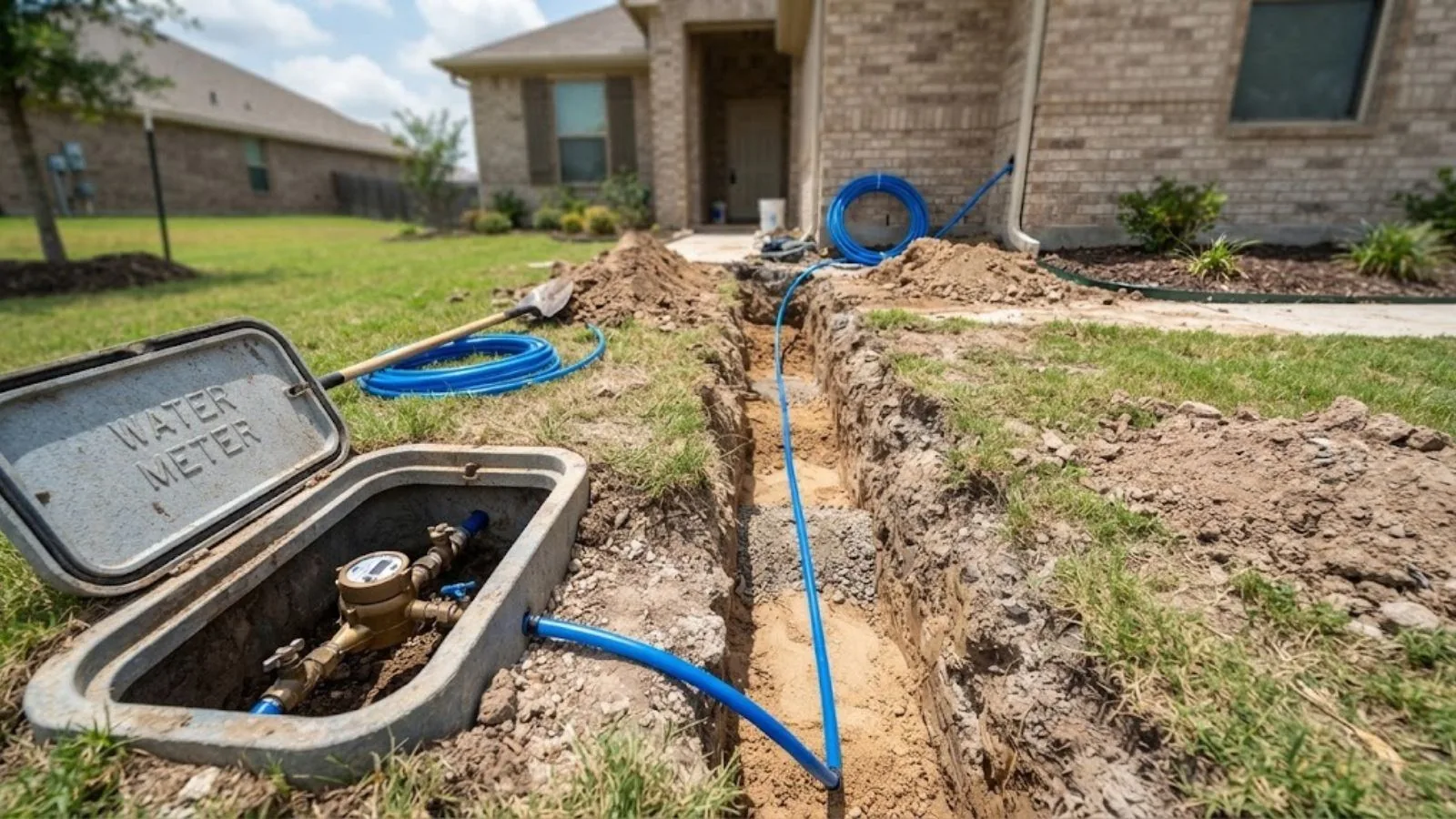
The meter sits in a ground box near the street or the property line, under a lid you can lift with a screwdriver. Wear gloves and look inside for spiders before you reach in. Keep your hands clear of the box edge, and never stand where traffic can reach you.
The register and the leak indicator
Most residential meters show a row of digits like an odometer, in gallons or cubic feet. Many also have a small triangle, star or low-flow wheel that spins when even a trickle passes. That indicator is the fastest leak check there is, because it turns for flows too small to move the digits.
Reading the numbers
Write down the digits, wait, then write them down again. The difference is what passed through. If the meter reads in cubic feet, remember that one cubic foot is about 7.5 gallons, so small changes add up quickly.
The Meter Test With Everything Off
This test takes about fifteen minutes and tells you whether the leak is inside your plumbing system at all.
Stop all water use.
Turn off taps, shower, dishwasher and washer. Pause the ice maker and the irrigation controller. Make sure nobody flushes during the test.
Read the meter.
Open the lid and note the digits and the position of the low-flow indicator. A photo with your phone is a good record.
Wait ten to fifteen minutes.
Do not use any water. A softener that regenerates or a refilling toilet tank can spoil the test, so keep an eye on those.
Read it again.
If the digits advanced or the indicator keeps turning, there is a leak. If nothing moved, the plumbing is tight and the bill question lies elsewhere.
Close the main and recheck.
Shut the home's main valve and look at the meter again. If it still moves, the leak is on the supply side before the valve. If it stops, the leak is inside the house or yard system.
Who at the City Handles Billing and Meter Questions
The City of Crowley Public Works main number is 817-297-2201, and the Water Utility Manager can be reached at extension 3210. Use these for questions about a bill, a re-read of the meter or how a particular read was taken.
Before you call, have your meter test result, the old and new reads, and the date of the high bill in front of you. If your test shows a moving meter, tell Public Works so they can say where the city side ends. The city pages do not spell out that boundary, so ask rather than assume. After hours, the city lists Police Dispatch at 817-297-2276 for water breaks.
Source: City of Crowley Public Works page
Quiet Leaks That Hide Behind a High Bill
After a moving meter, these are the usual culprits, listed from the easiest to check to the hardest.
Toilet flapper
Drop ten drops of food coloring in the tank, do not flush, and wait fifteen minutes. If color shows in the bowl, the flapper is leaking. A worn flapper can waste dozens of gallons a day without any sound.
Irrigation zones
Run each zone for a minute and look for geysers, soggy spots or sunken ground. A cracked 3/4 inch PVC line or a stuck valve can run all night. Remember that the Crowley IPC amendment calls for a reduced pressure backflow preventer on irrigation with chemical injection.
Hose bibbs and fixtures
A dripping outdoor spigot or a faucet washer that has failed adds up over a month. Look for wet soil under the spigot and mineral rings around the handle.
Water heater relief valve
Check the pipe from the temperature and pressure valve and the drain pan. A slow weep from the valve is easy to miss and can run constantly.
What You Can Handle and What Needs a Plumber
Some causes are a ten-minute fix. Others sit in a wall or under a slab where guesswork makes things worse.
What you can do yourself
- Run the meter test and write down the results.
- Dye test every toilet and swap a worn flapper.
- Walk the yard for soggy ground after running each sprinkler zone.
- Tighten a loose supply connection by hand and replace a bad washer.
When to call a plumber
- The meter moves with every fixture off and the toilets pass the dye test.
- You find a warm spot on the floor or hear water in a wall.
- A wet patch appears in the yard between the meter and the house.
- The leak is at a shutoff valve, a water heater or a pipe joint you cannot reach.
Clues That Point to the Source
Use this as a quick way to match what you see to the next step.
| What you see | Likely source | Next step |
|---|---|---|
| Indicator spins, floor feels warm | Hot line under slab or in wall | Call for leak detection with listening gear. |
| Indicator spins, wet spot in the yard | Service line leak | Shut the main and arrange a line check. |
| Indicator spins, toilet dye shows in bowl | Toilet flapper or fill valve | Replace the flapper or valve. |
| Meter steady, bill up | Heavy use or a read question | Compare reads and call Public Works. |
| Meter steady only at night | Irrigation or timed device | Check the controller schedule and zones. |
What a Plumber Does When the Leak Is Real
A licensed plumber repeats your meter test, then isolates sections with the main, the water heater and the outdoor line to find which zone loses pressure. From there, listening gear or a thermal camera narrows the spot. You see the result and a clear price before any digging or cutting.
If the loss is between the meter and the house, a water line repair may call for a short trench. Inside the house it might be a fixture, a joint or a pipe. We serve Crowley and nearby towns such as Burleson and Everman, and a call to (817) 601-6266 reaches dispatch any hour.
Keep your meter photos and the plumber's findings. If your carrier or the city asks for proof, those records back up the timeline.
High Water Bill Questions
Run the meter test: all fixtures off, read the meter, wait ten to fifteen minutes, read again. If the digits or the leak indicator moved, you have a leak. Then do the toilet dye test, since toilets are the most common quiet source.
Call Public Works at 817-297-2201 and ask for the Water Utility Manager at extension 3210. Have your read dates and test results ready. They can explain how a read was taken and whether the meter can be rechecked.
A toilet that runs steadily can waste dozens to hundreds of gallons a day, depending on how hard it runs. It often makes only a faint trickle, which is why it goes unnoticed. The dye test finds it in fifteen minutes.
Yes. A stuck zone valve or a cracked line can run for hours before anyone sees it. Run each zone by hand and look for wet ground, and check the controller for a changed schedule.
Homeowners policies usually cover sudden and accidental damage and usually not slow leaks or wear. Billing increases from a hidden leak often fall on the homeowner. Ask your carrier before repairs begin.
That would normally be on the city side. Tell Public Works what you found and ask where the city responsibility ends, since the city pages do not state it. A plumber can document what you see.