Clear a Single Drain the Safe Way
Work from the least invasive tool to the most. Stop as soon as the water runs.
Remove standing water and visible debris.
Bail the sink or tub. Pull out any hair or gunk from the strainer or stopper by hand with gloves.
Plunge with a seal.
Use a cup plunger on sinks and tubs, and a flange plunger on toilets. Block the overflow opening with a wet rag, then push and pull firmly for 20 seconds.
Snake the trap.
Feed a small hand snake into the drain until it stops, crank the handle and pull it back. Expect hair or sludge on the tip.
Flush with hot tap water.
Run hot tap water for a minute. Do not use boiling water, which can soften PVC joints and crack porcelain.
Why Chemical Openers Are a Bad Bet
Especially if the water is backing up
Caustic openers sit in standing water and do not reach a blockage in the main line. They can burn skin and eyes, and they leave dangerous water in the pipe for the next person. Never pour them into a backup.
A plumber working on a drain full of chemicals has to treat the water as hazardous. That slows the job and adds risk. Use a snake or call us instead.
Which Drain, Which Likely Cause
Where the clog shows up tells you a lot about what is blocking it.
| Where | Common cause | First move |
|---|---|---|
| Bathroom sink. | Hair and toothpaste buildup in the trap. | Pull the stopper, then snake. |
| Shower or tub. | Hair and soap scum near the strainer. | Lift the cover, pull debris, then plunge. |
| Kitchen sink. | Grease and food bits in the trap. | Plunge, then clean the P-trap. |
| Toilet. | Too much paper or a foreign object. | Flange plunger, then a closet auger. |
| Several fixtures. | A blockage in the main line. | Stop using water and call. |
What a Slow Drain Is Telling You
A drain that empties slowly has a partial blockage, and the water will keep taking the path of least resistance until it stops entirely. Slow drains often get worse in steps, not all at once.
Gurgling is air being pulled through a trap because water cannot pass. A smell of sewer gas from a drain can mean a dry trap or a vent problem. Standing water in a tub when the washer drains points to a blockage downstream of both.
Check the pattern before you grab a tool. A single slow sink is usually a trap problem you can fix in ten minutes. A slow tub plus a gurgling toilet on the same branch means the clog is farther down, past anything a plunger can reach.
Drains are built to a plumbing code standard, with traps and vents that keep sewer gas out. If you open a trap and it will not seal again, that is a job for a licensed plumber.
Toilet Clogs Are Their Own Case
A toilet has a built-in trap shaped like an S, and a flange plunger seals into it. Push slowly the first time to push out air, then pull sharply. A closet auger, with its protective sleeve, reaches the bend without scratching the porcelain.
Do not keep flushing a toilet that is rising. The tank will refill the bowl and spill onto the floor. Lift the tank lid and lower the flapper by hand, or close the supply valve at the wall, to stop the water.
A Growing City and the Drains Behind You
Crowley's population was 18,070 at the 2020 census, up 40.8 percent from 12,838 in 2010. A lot of that growth meant new subdivisions connecting to the same city wastewater system, so many drains here feed into a network that has been expanding.
Public Works handles wastewater collection, and the main number is 817-297-2201. If your neighbors on the street report backups too, the problem may be in the city main rather than your line, so call Public Works early and tell them what you see.
Source: US Census via Wikipedia
DIY or Call: Where the Line Sits
A good test is whether the problem is one fixture or the whole house.
What you can do yourself
- Plunge one sink, tub or toilet.
- Clean a P-trap under a sink.
- Use a hand snake on a short run.
- Pour a little dish soap and hot tap water down a greasy drain.
When to call a plumber
- More than one fixture is slow or backed up.
- Water or sewage rises in the lowest drain.
- The clog returns within days.
- A snake hits something solid and will not pass.
What a Plumber Does That a Snake Cannot
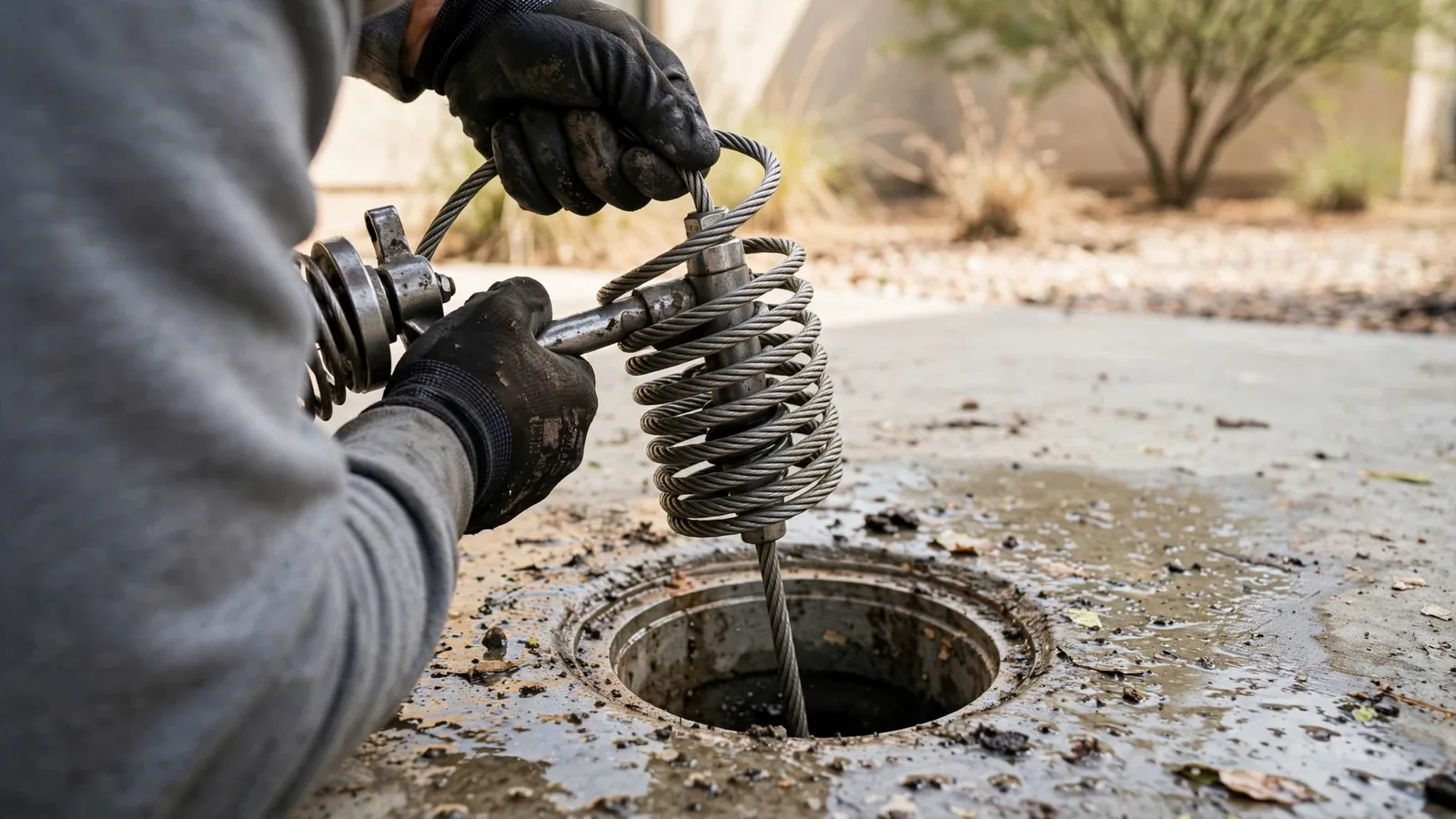
A hand snake is a few feet of coiled steel. A professional drain machine runs a cable 50 to 100 feet with cutting heads that chew through roots and grease. It reaches the main line cleanout and beyond.
For stubborn grease, scale or roots, hydro jetting blasts the pipe wall clean with high pressure water. A camera confirms the line is clear and reveals cracks or bellies that cause repeat clogs.
If we find damage, we explain the options and give a clear price before any repair starts.
What Affects the Cost of Drain Cleaning
We do not post prices, since the job differs by the drain. These factors decide the quote.
Homeowners policies usually cover sudden and accidental damage and usually do not cover slow clogs from wear or neglect. Ask your carrier about sewer backup coverage.
Habits That Keep Drains Moving
A little prevention goes a long way.
- Use a hair catcher in showers and tubs.
- Scrape grease into the trash, not the sink.
- Flush only toilet paper and waste, even if wipes say flushable.
- Run hot water for 30 seconds after washing dishes.
- Clean your P-traps and stoppers a couple of times a year.
These habits will not fix an existing clog, but they cut the odds of the next one.
Nearby Towns, Same Process
If you live in Burleson or Everman, the steps and the warnings are the same. We are open 24/7, so a backup in the middle of the night does not have to wait. Call (817) 601-6266 and we will help you decide what to do while we head your way.
Clogged Drain Questions
Start with a plunger, then a hand snake, then hot tap water. Avoid chemical openers, especially when water is backing up.
No. Boiling water can soften PVC joints and crack porcelain. Use hot tap water instead.
It usually means a blockage in the main line, downstream of those fixtures. Stop using water and call a plumber.
City of Crowley Public Works handles wastewater collection. The main number is 817-297-2201. We can inspect the line on your side.
It may loosen light buildup near the drain, but it rarely clears a real clog. Plunging and snaking work better.
Yes, we are open 24/7. If water is rising, stop using fixtures and call us.